No products in the cart.
No products in the cart.

A damaged rear bumper is one of the most common reasons a heavy-duty truck lands in the shop — and one of the most overpriced to fix at the dealer. Back into a loading dock, catch a trailer on a tight turn, or let rust win on an older steel bumper, and the factory replacement quote is almost always a shock. The smart alternative is an OEM take-off rear bumper: the exact factory part, in your factory paint, for a fraction of new-dealer pricing. This guide explains what a take-off rear bumper is, the anatomy and configuration details that decide whether one fits, how paint and sensors work, what to inspect, how freight shipping works, and exactly what information to send us so you order the right bumper the first time.
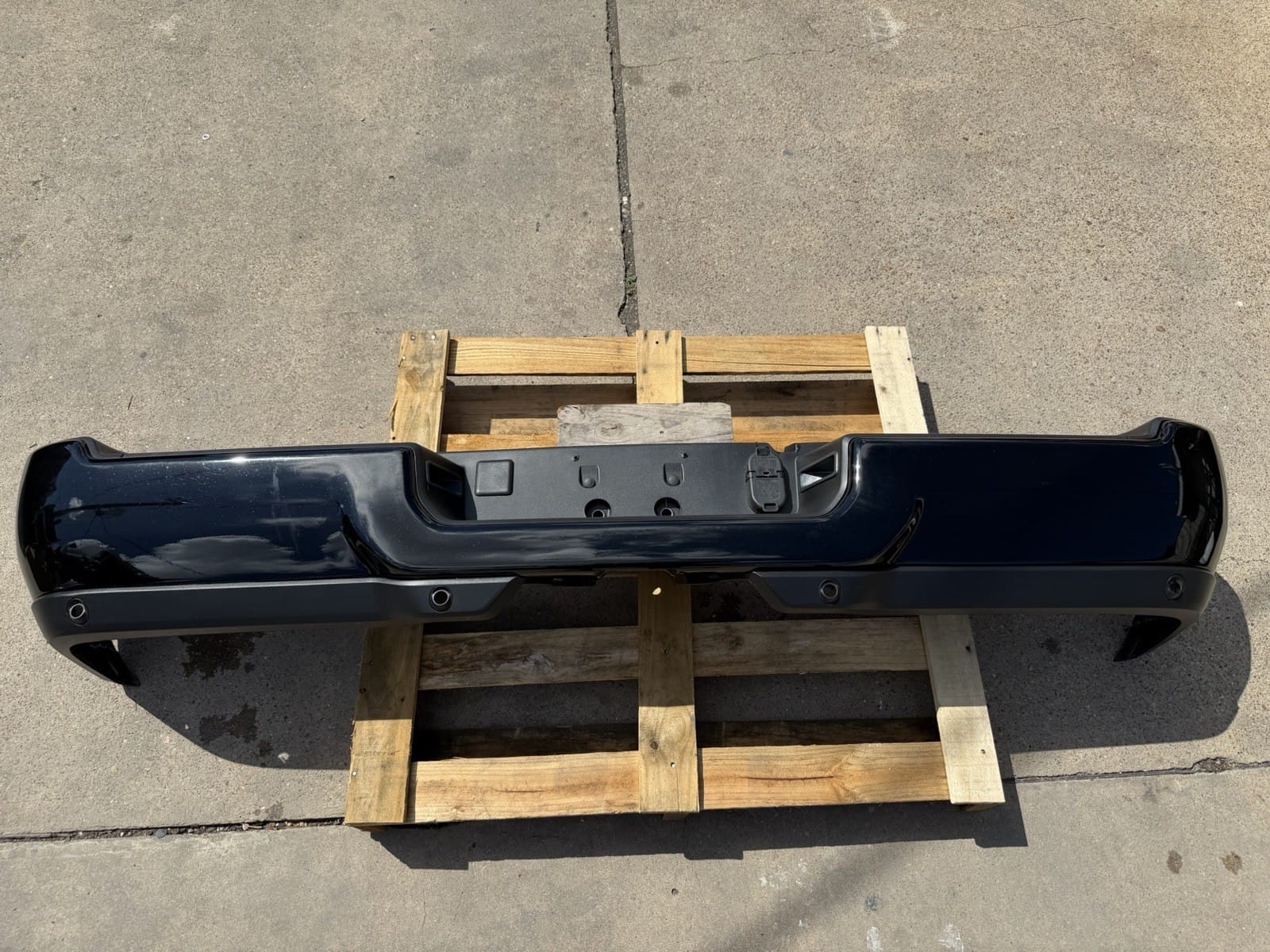
An OEM take-off rear bumper is a genuine factory bumper removed from a new or nearly-new truck — usually because the original owner switched to an aftermarket bumper, a flatbed, or a hitch/step setup shortly after buying. It is the same part your truck rolled off the line with: same steel, same reinforcement, same mounting points, same sensor and camera provisions, and the same body lines. Because it’s a take-off rather than a brand-new dealer part, it costs far less while still delivering true factory fit and finish.
That’s different from an aftermarket rear bumper (a third-party redesign) and from a used salvage bumper of unknown history. A take-off is factory-original and, at a specialist like Texas Truck Parts, is inspected before it ships. If you want the bigger-picture comparison, our OEM take-off vs aftermarket vs used guide breaks down all three routes.
A modern heavy-duty rear bumper is more than a painted bar. Knowing the pieces helps you understand why an exact match matters:
Front bumpers get most of the attention, but the rear bumper on a late-model HD truck is quietly harder to match because it has to line up with several systems at once — sensors, camera, steps, and paint. “A rear bumper for a 2020 F-350” isn’t specific enough: the color, the sensor configuration, and the step type all have to agree. That’s why buying from a specialist who lists those attributes beats gambling on a generic listing.
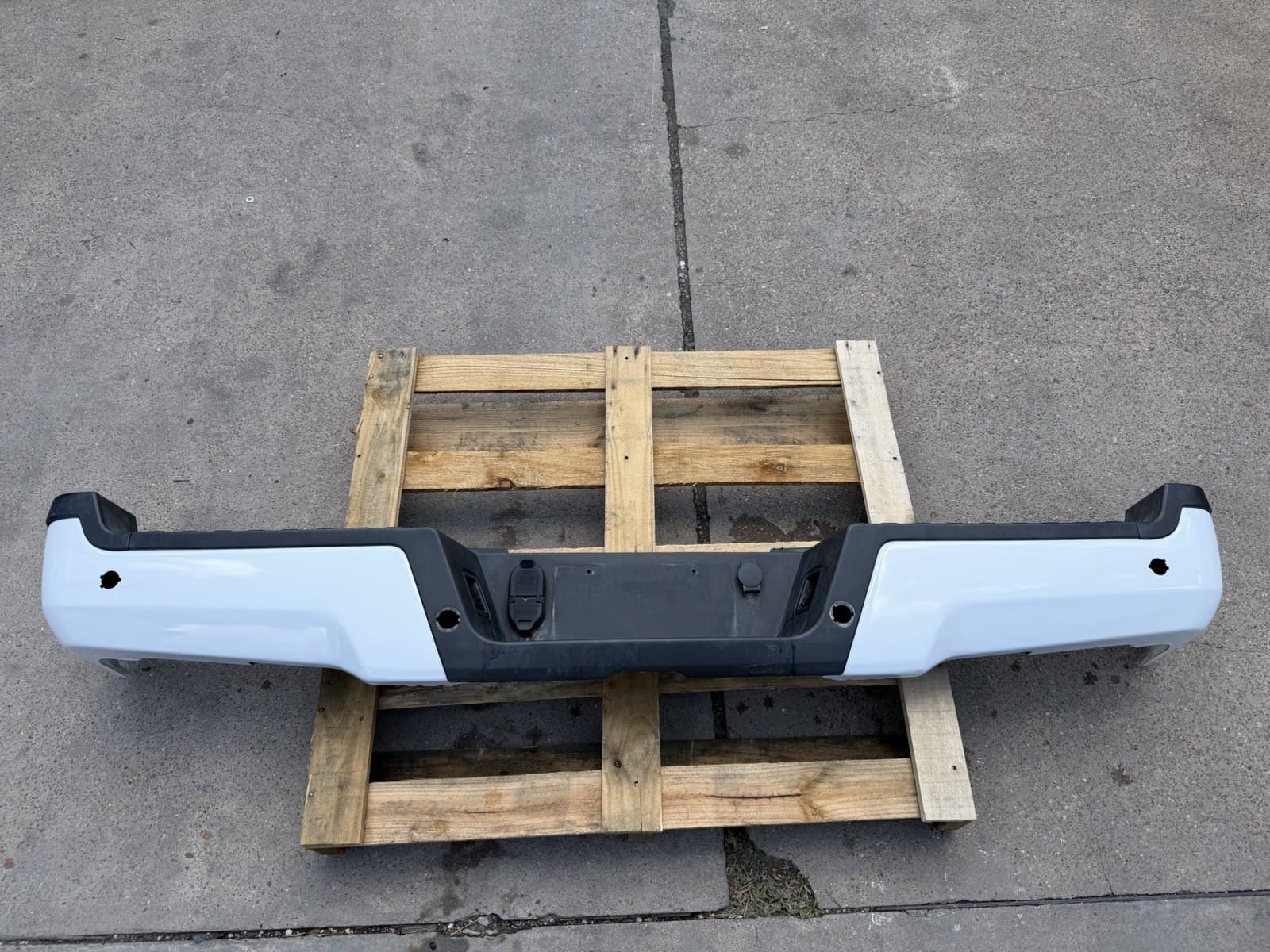
Park-assist is the single most-missed variable. If your truck was built with rear parking sensors, your bumper has molded sensor pockets, and the replacement must have the same openings so your factory harness plugs straight back in. A “with sensor holes” bumper will not look or function right on a truck that never had sensors, and a “no sensor” bumper won’t accept your park-assist. Before you order, count the sensor openings on your current bumper and note whether it has them at all.
Many HD trucks came with molded corner steps (or a center step) for bed access — step vs no-step is a real fitment variable, and swapping between them changes the look and the function. Camera location matters too: some trims mount the backup camera in the bumper or license-plate area, others in the tailgate handle, so the bumper has to match how your truck was built. When in doubt, a couple of clear photos of your existing bumper tell us everything we need.
A rear bumper is a large, eye-level painted surface, so color match matters more here than almost anywhere else on the truck. Our take-off rear bumpers are factory-painted in their original color code, which means a seamless look with no blend or respray when the code matches your truck. Find your factory color code on the driver’s door-jamb sticker and send it with your order. Our truck paint-code reference shows exactly where to look and what the common Ford, Chevy, GMC, and Ram codes mean.
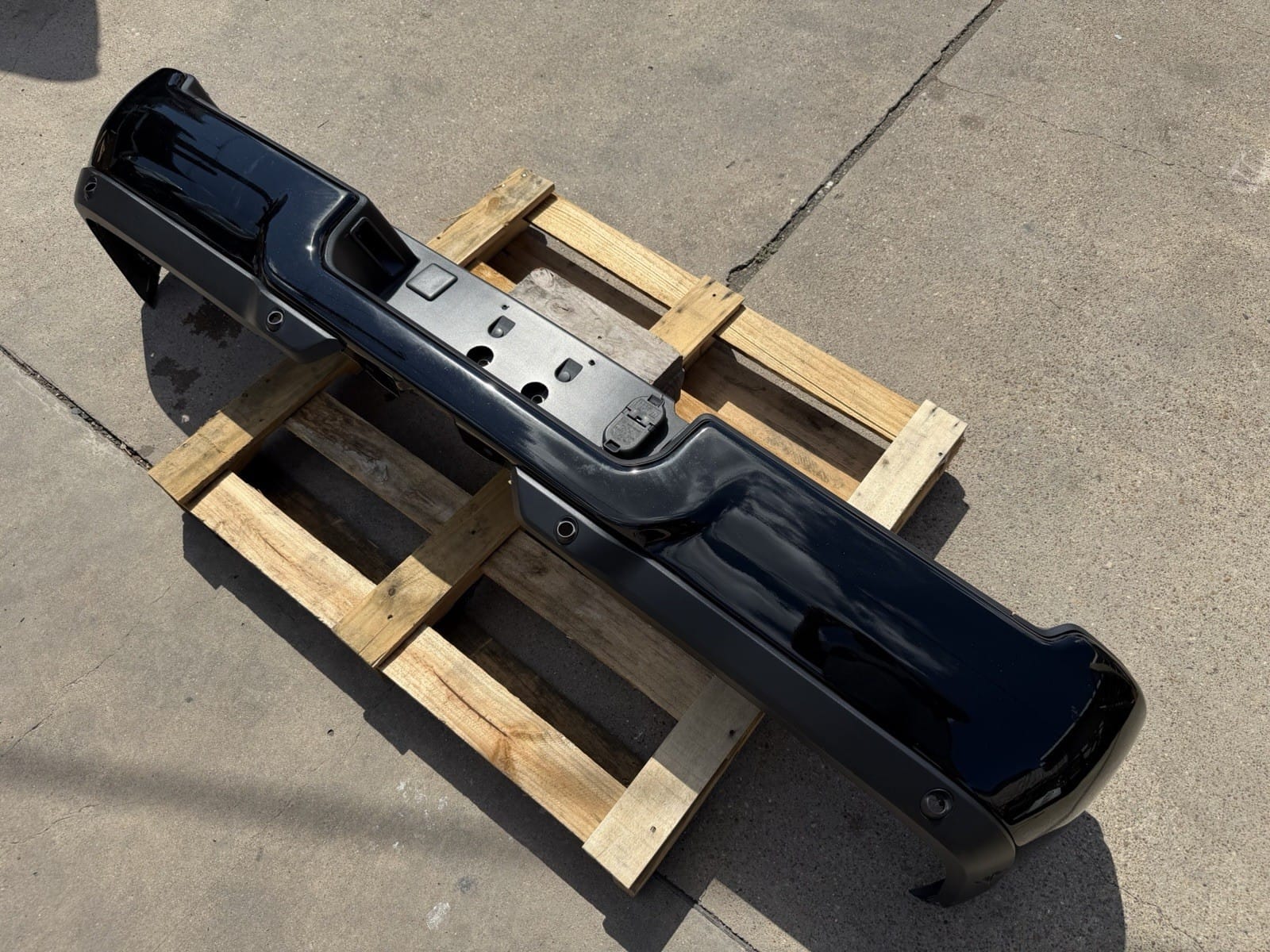
Rear bumpers are generally shared across single-rear-wheel (SRW) and dual-rear-wheel (DRW/”dually”) versions of the same truck line, because the bumper bolts to the frame rather than the bed. The variables that actually decide fitment are year/generation, sensor configuration, step type, camera provision, and paint code — not SRW vs DRW. That said, always confirm with your year, make, and model, and we’ll verify the exact fit before anything ships.
New from the dealer gives perfect fit and finish, but you pay full retail for the bar plus, in many cases, separate charges for the reinforcement, sensors, brackets, and paint — the all-in number climbs fast. Aftermarket steel rear bumpers are great for work and towing builds, but they change the look, often relocate or delete sensors, and usually mean running without factory park-assist unless you add a kit. OEM take-off is the sweet spot when your goal is “put it back to stock”: factory appearance, factory sensor and camera compatibility, and factory paint, without dealer pricing. If you’re weighing a work-focused steel upgrade instead, our OEM vs aftermarket and best aftermarket front replacement bumpers guides cover the same trade-offs.
We inspect every bumper before it ships and share exact-item photos so you can see the actual part you’re buying — not a stock image.
To match the exact bumper the first time, send us four things: your year, make, and model; your VIN (it decodes trim and factory options); your paint code from the door-jamb sticker; and a photo of your current rear bumper showing the sensors and step configuration. With those, we can confirm sensor holes, step type, camera provision, and color before anything ships — which is faster and safer than guessing from a listing. Generation details matter too, so our generation guides for Ford Super Duty, Ram HD, and Chevy/GMC HD help you pin down the right year range.
Rear bumpers ship as oversized freight, not a small parcel. Listed prices include free freight to a commercial or business address in the Lower 48; residential delivery on oversized items may add a carrier fee, and if it applies we’ll contact you to confirm before we ship. LTL freight typically runs 5–10 business days from order, and free local pickup is available in the Houston metro (we ship from Sugar Land, TX). Every freight order is covered by our Damage-in-Transit guarantee — always inspect the bumper and note any damage on the delivery receipt before you sign. For the full rundown, see our truck part freight & delivery guide.
A factory rear bumper plus paint doesn’t have to be a one-time hit to the wallet. We offer financing and leasing through Snap, Acima Leasing, and Progressive, so you can get the part now.
Yes — as long as the year/generation, sensor configuration, step type, and camera location match. That’s why we ask for your year, make, model, and VIN before confirming a fit.
Our take-off rear bumpers are factory-painted in their original color code. Send us your paint code from the door-jamb sticker and we’ll match it.
We match the sensor-hole configuration to your truck. If your bumper has sensor holes, we source one with the correct openings so your factory park-assist plugs right back in.
Generally yes — the rear bumper bolts to the frame, so it’s usually shared across single- and dual-rear-wheel versions of the same truck. Fitment is decided by year, sensors, step, camera, and paint. Send your year/make/model and we’ll confirm.
Many owners do — it’s typically a bolt-on job with hand tools once the old one is off, though a second set of hands helps with alignment. If your truck has sensors or a camera, transfer them carefully and check function before final torque.
LTL freight delivery typically takes 5–10 business days from order. Free local pickup in the Houston metro is available.
Ready to put your truck back to factory? Browse the rear bumper category, or send your year, make, model, VIN, and paint code and we’ll match the exact OEM take-off rear bumper — factory paint, correct sensors, and honest freight — for a fraction of dealer pricing.